Thoughts on liminality
Art has always been both central to the human condition, and at the same time, has always been liminal. That appears to be a contradiction in terms, but as always, art inhabits paradox.
One of the first things we did as a species is make art. Of course, we didn’t call it art. It started out functional. Lacking the warm fur, feathers or scales that other species use to regulate their relationship with the elements, we devised coverings for our skin. But then, we had to decorate them. We coloured them, cut them, applied beads and trinkets, ribbons and laces. Then it seemed worthwhile to add other things – amulets, beads, more ribbons. We found we could pierce parts of our skin to hang these pretty things from.
We grew to understand our separation from, but connection to, the cosmos, and nature. We felt the urge to make drums and create sound. We made up stories and told them and then painted them in ochre clays we found in the earth. We covered the walls of caves with these paintings and carved them into stones in the wilderness.
We learned to cook our food, and dug up some of the clay to create pots to carry food and water in. We started to fashion the pots, to carve them, embellish them, pinch them and colour them.
Aeons passed. We farmed. We built cities, discovered gods, and made temples. All of this was accompanied by the curious behaviour we can call ‘art’. It seemed as necessary to us as drawing breath. It’s clear, from the relics our ancestors left behind, that Maslow’s hierarchy of needs should put art pretty close to the bottom. We must need it; we keep doing it.
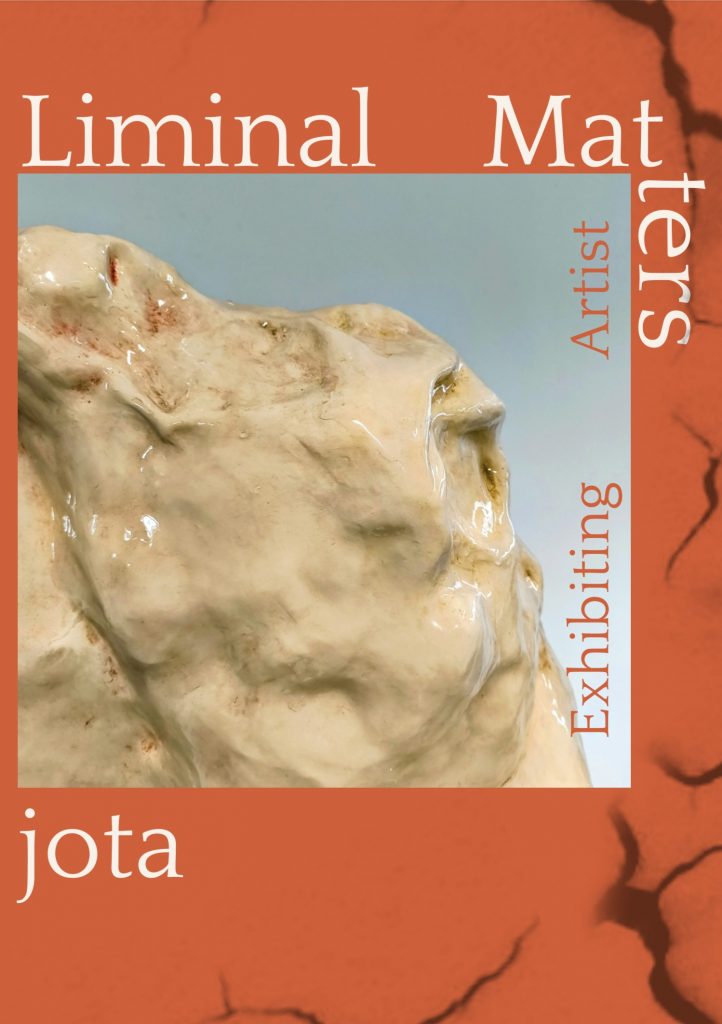
There hasn’t ever been a culture that has no form of art. Although the Athenians mocked the Spartans for their lack of culture, in fact, the Spartans had a rich tradition of art, particularly in metalwork, pottery, ivory carving, music, poetry, and dance, which often celebrated their military and religious values. You can see examples in the Metropolitan Museum of Art [1] and the British Museum.[2] Here in the Liminal Matters exhibition, you can see the work of Jota, whose modern take on the Spartan saga was developed with the British Museum.
Yet, despite its centrality to the inexorable march of human activity, art has also always been – to a greater or lesser extent – outside. Firstly, only a few people in a community ever did it systematically. People came forward, or were chosen, to create the art and artefacts. The gorgeous Folkton Drums[3], carved from chalk with incised decoration, were made by somebody with real talent. Somebody in the wilds of North Yorkshire in 2500BC-2000BC (circa) had the skill and imagination to make these things. So did someone in the community in Marvdasht, Persia around 6200 BC – 5000 BC, who decorated a pot with complicated and attractive black lines.[4]
The bare fact is, it took someone a bit extraordinary to be able to make these things, or at least to make them well and make them beautiful. And that extraordinary person is the artist, who gets to be the person whose work ends up, as per Michelangelo and the Renaissance – ‘standing for’ a whole period of history – but also gets to be the weird one in the room. Nothing is for free.
Anyway, what does this whistle-stop tour of art history have to do with contemporary art and design, and this exhibition in particular? Like most writers I’m compelled to talk about myself here. I was initially fascinated by film, digital, and video art. I thought it was amazing and wonderful. But then I realised that painting – especially ‘traditional’ painting had actually done it all before – the technology had simply added movement. More recently, almost to my surprise, I started finding myself getting excited by art forms I had never given a second glance to. Textiles, ceramics, Glass, and metal. I feel like I’m living my aesthetic life backwards.
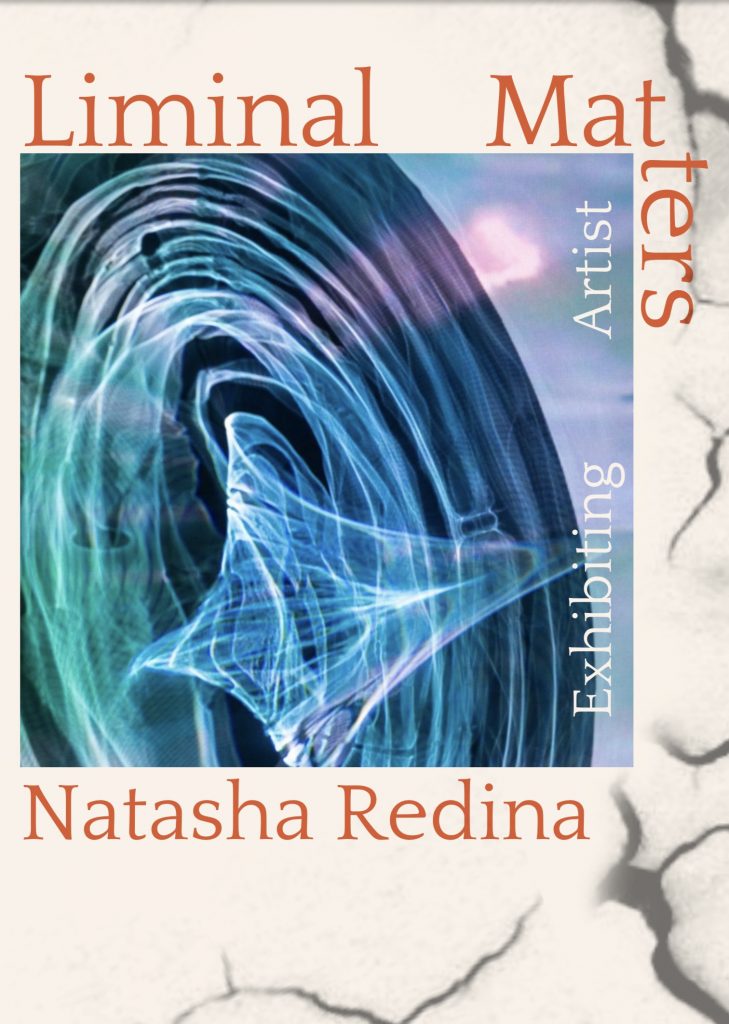
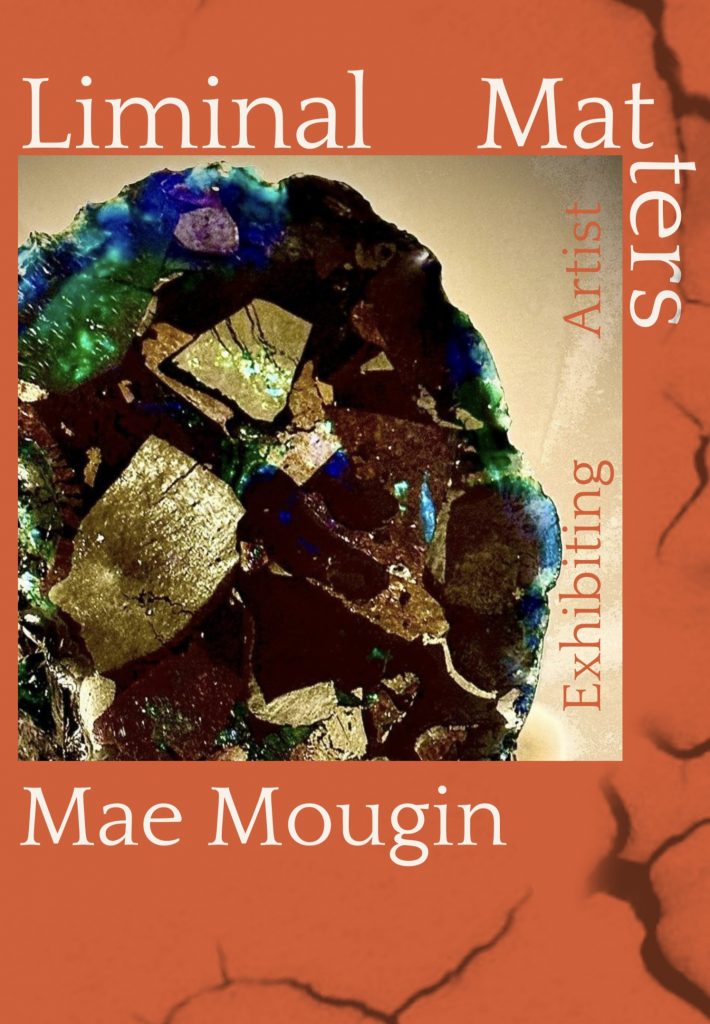
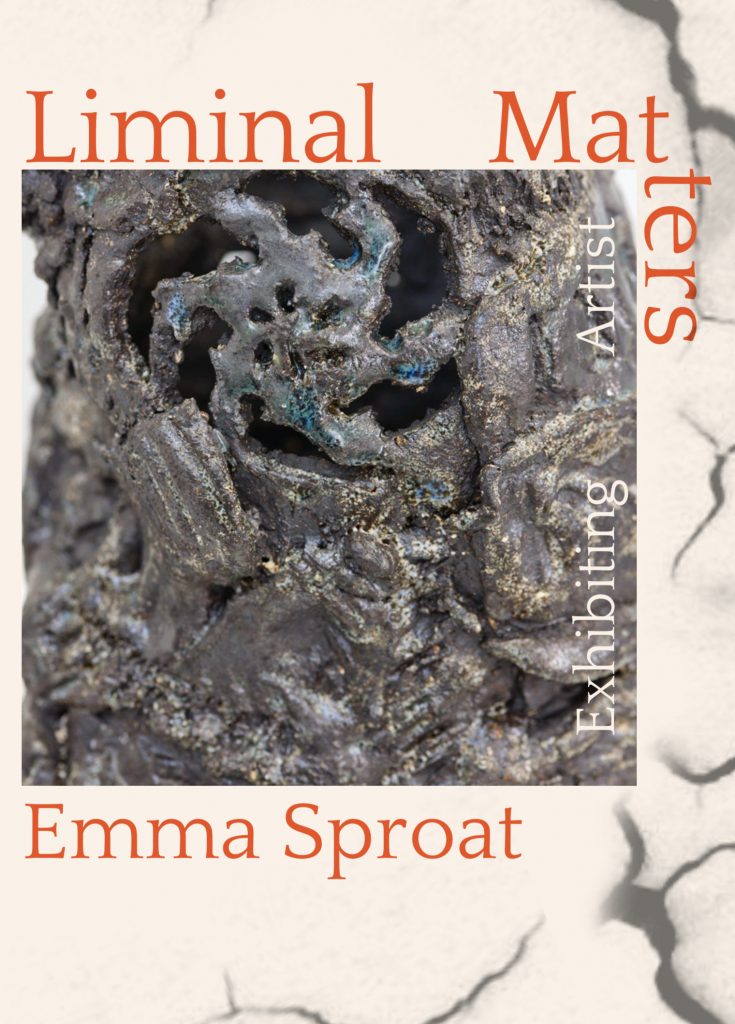
Realising that there’s a direct continuum from the very person who scooped a handful of clay from the earth and pondered what they could do with it, to Emma Sproat’s intricate stoneware, is actually thrilling. The link between a chunk of obsidian glass thrown up by a volcano and carved, to the Mesopotamians who decided to mix sand, soda, and lime to make glass, to a medieval stained-glass window, to Natasha Redina and Mae Mougin’s very different but equally compelling glass works, is a strong one. And in today’s simulacra-filled, constantly mediated, screen-based culture, that chain is immensely important. You could even call it a lifeline.
So, when the Liminal Matters collective approached me to curate their first exhibition, I was both honoured and excited. Honoured because it’s nice to be asked, but it’s especially nice to be asked when it’s a group of thoroughly talented and innovative practitioners. But even more, I was excited because I had not really curated this kind of work before; yet, as I said, I had become entranced by ceramics, glass, and metal work over the past couple of years.
Because the other thing I have become increasingly appreciative of recently is the philosophical aspect of making. The alchemy of it. The notion of transformation of matter from being one thing to being another. From digging clay out of the ground, to that clay becoming Jota’s moving, emotionally powerful sculptures, the force of the process, consider the amount of time that the transformation takes, when the end point seems to the bystander to be nowhere in sight. And then, the process is complete, and the work is there.
So, suddenly, I have found myself curating a show of highly talented emerging and mid-career artists working with these fundamental materials, but doing so in new ways and reimagining age-old traditions. Finding new ways to apply techniques, using new methods such as 3D printing. Crafting new or revised narratives. Inviting the audience to see things differently.
So, what can I bring to the scenario? My own experience has been about exploring liminality in a whole range of ways, primarily through site-specific and site-responsive projects. This lends itself well to this kind of work. It’s about coming up with meaningful ways to site and present matter in space. We’re fortunate to have a terrific space in which to do it. The site on Woodseer St is typical of the Spitalfields area: fairly old, functional, practical. Reflecting the area’s very recent industrial past. The area lies just outside the traditional borders of the City of London; it’s very old and it’s seen a lot. It has hosted many waves of migrants, and more recently, a lively and passionate art community. Liminality is built into its very bricks, which were of course originally made in nearby Brick Lane.
So, Liminal Matters debuts here, on Woodseer Street, in an exhibition of 18 members of the collective, and three esteemed guest artists. I’m very proud to be part of the project and I believe it is an inspiring beginning.
Gillian McIver 2025
[1] https://www.metmuseum.org/essays/art-and-craft-in-archaic-sparta
[2] https://www.britishmuseum.org/collection/object/G_1849-0518-14
[3] https://www.britishmuseum.org/collection/object/H_1893-1228-15
[4] https://www.britishmuseum.org/collection/object/W_2009-6017-186
Gillian McIver is a Canadian curator, art history researcher and writer based in London. She started out convening large scale site-specific projects with the collective Luna Nera and then ran the East London gallery Studio75. She received her MA from the University of Toronto and PhD from the University of Roehampton. She is the author of two books that analyse the relationship between art history and cinema, Art History for Filmmakers (2016) and Between Realism and the Sublime (2022), both published by Bloomsbury Press.
https://curator.gillianmciver.org/
https://roehampton.academia.edu/GillianMcIver/CurriculumVitae